


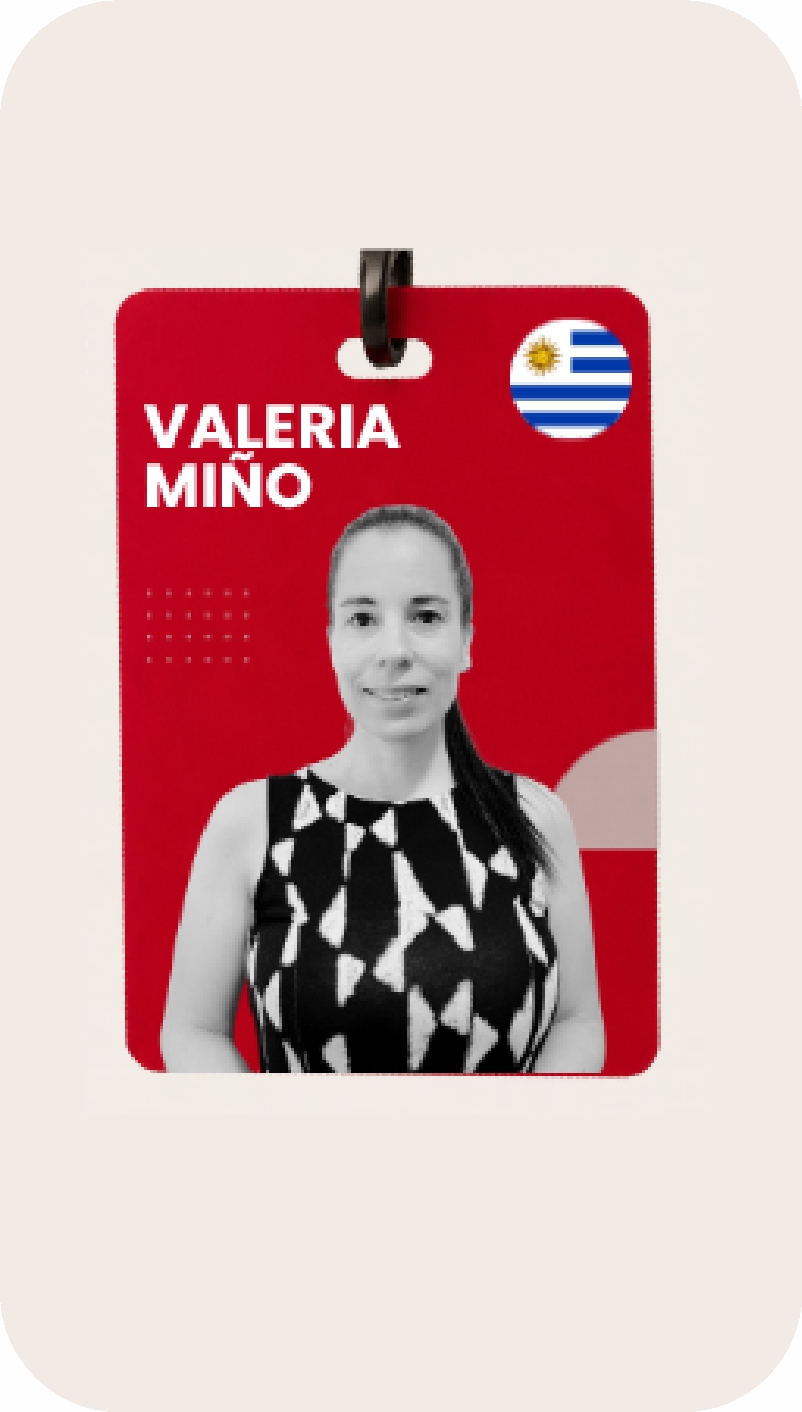
Valeria Miño
Prof. Lic. Valeria Miño is an EFL teacher and inclusive education specialist with experience in language teaching, teacher education, curriculum design, and educational technology. She is currently pursuing a Master’s degree in Foreign Language Teaching at Universidad de la República, focusing on scaffolding strategies for students with special educational needs in EFL classrooms. She coordinates the English Department at Colegio Santa María in Montevideo and facilitates workshops and teacher-training initiatives on inclusive education and language-teaching practices. Her work and research have been presented at national and international conferences, with a focus on accessibility, scaffolding, and inclusive strategies for SEN learners.
Scaffolding as Inclusive Assessment: Supporting SEN Learners in the EFL Classroom
Inclusive assessment remains one of the greatest challenges in English language teaching, particularly in classrooms where students with special educational needs (SEN) are expected to demonstrate learning through standardised practices that may not fully reflect their abilities. This presentation explores how scaffolding can serve not only as a teaching strategy but also as an inclusive assessment that enables teachers to gather more meaningful and valid evidence of student learning. Drawing on a qualitative multi-case study conducted in inclusive primary EFL classrooms in Montevideo, the research examines how teachers adapt instruction, interaction, and assessment practices to support diverse learners. Grounded in sociocultural theory (Vygotsky, 1978; Lantolf & Thorne, 2009), the study analyses scaffolding practices (Gibbons, 2015) through classroom observations, semi-structured interviews, and teacher focus groups. Findings suggest that micro-scaffolding strategies (Parkin & Harper, 2018), differentiated instruction (Tomlinson & Moon, 2013; Tomlinson, 2017), and responsive teacher mediation allow educators to assess learners within their zones of proximal development rather than through rigid performance expectations. In this sense, scaffolding becomes a mechanism for maintaining validity in inclusive assessment by reducing barriers to participation while preserving meaningful evidence of language development. The presentation also highlights the role of reflective pedagogy in helping teachers make ethical and context-sensitive assessment decisions in diverse classrooms. Practical examples from the study will be shared to illustrate how inclusive assessment can be embedded into everyday EFL practice without lowering academic expectations. This session invites teachers and coordinators to rethink assessment as a dynamic, supportive, and equitable process in which scaffolding plays a central role in ensuring that all learners can meaningfully demonstrate their progress.