


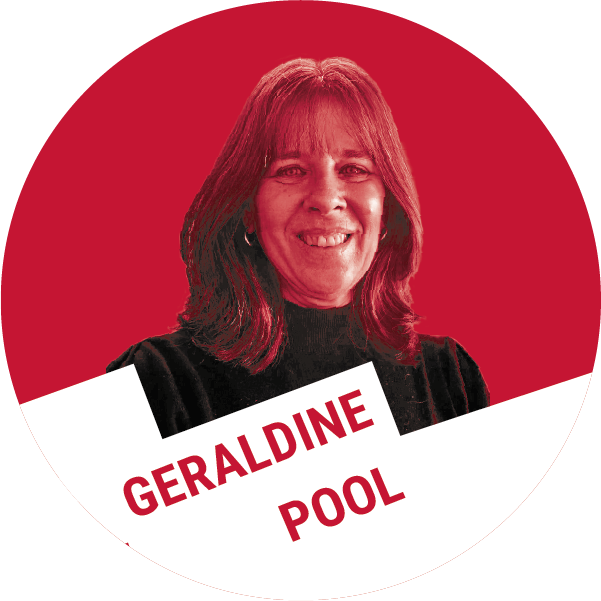
Geraldine Pool
Director General of The Anglo School in Montevideo and Regional Team Leader for Cambridge English Language Assessment, Speaking Exams. With over 30 years of experience in bilingual education, she has held leadership roles in curriculum development, teacher training, and assessment. She has taught and mentored teachers through programmes such as DELTA and the Diploma in TEFL. Geraldine has also served as Programme Leader for internationally recognised certificates in Teaching Bilingual Learners and Teaching with ICT. She holds a Licenciatura en Letras Modernas from the Universidad de la República and is deeply committed to continuous improvement in bilingual teaching and learning.
Beyond memorisation: Teaching for Long-Term Learning.
This talk explores how insights from neuroscience can help educators move beyond short-term memorization and foster deep, lasting learning. Drawing on the science of memory, participants will examine why common strategies like rereading and cramming are ineffective, and learn how to implement evidence-based practices such as retrieval practice, spaced learning, and interleaving. The session offers practical classroom tools and planning ideas to support a shift toward more effective, brain-aligned teaching that prepares students for the future of learning.
In this practical session, we will explore what neuroscience reveals about how memory works—and how we can use that knowledge to design instruction that leads to real, lasting learning. We’ll look at why so many traditional strategies (like rereading, highlighting, or cramming) fail to support long-term retention, and what teaching practices are scientifically proven to help students truly learn. The session will introduce powerful, evidence-based techniques such as retrieval practice, spacing, and interleaving, and show how to incorporate them into lesson planning, review routines, and homework tasks. We will also reflect on how to create a classroom culture where forgetting is expected and revisiting is routine. Participants will leave with a clearer understanding of how memory is built over time and a toolbox of simple but effective strategies they can apply immediately in any subject area or age group.